Managing Internationalization in HEIs
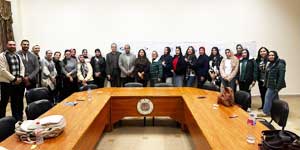
In line with its commitment to developing its international relations system and enhancing the capabilities of its specialized administrative staff, PUA held a specialized workshop titled “Why Internationalization?”. This workshop serves as the inaugural level of a comprehensive six-tier training framework titled “Managing Internationalization in Higher Education Institutions (HEIs).” Each level is presented as a specialized workshop designed to build a sequential and deep understanding of global academic engagement, ensuring that international relations coordinators are equipped with modern, world-class professional standards.
The first level of the program aimed to establish a solid foundation by introducing participants to the core principles and concepts of internationalization within the higher education sector, while highlighting its strategic importance at both academic and administrative levels. The workshop addressed several vital pillars, including deepening the understanding of internationalization within the contemporary university context and conducting analytical comparisons of its impact on learners, faculty members, and university leadership. Furthermore, the sessions focused on identifying institutional, cultural, administrative, and financial barriers that may hinder the internationalization process and explored effective strategies to overcome them.
The workshop also emphasized monitoring current global trends that are shaping the future of higher education, such as digital transformation, sustainability, and virtual exchange, and how to integrate these elements into institutional structures, curricula, and support systems. Participants engaged in practical exercises on designing innovative internationalization strategies and linking them directly to PUA’s general strategic plan. This approach ensures the realization of PUA’s vision of building strong, sustainable international partnerships with leading global academic institutions.
In conclusion, PUA reaffirmed that investing in the human capacity building of international relations offices is a fundamental element in enhancing its regional and international standing. The workshop significantly contributed to providing coordinators with the practical knowledge and tools necessary to manage international cooperation portfolios with high professionalism. This initiative is expected to yield positive results in the quality of international partnerships and the expansion of cooperation with foreign universities and institutions, supporting the university’s journey toward sustainable global academic excellence.


