Training Patterns at the College of Applied Health Sciences Technology
Field Training:
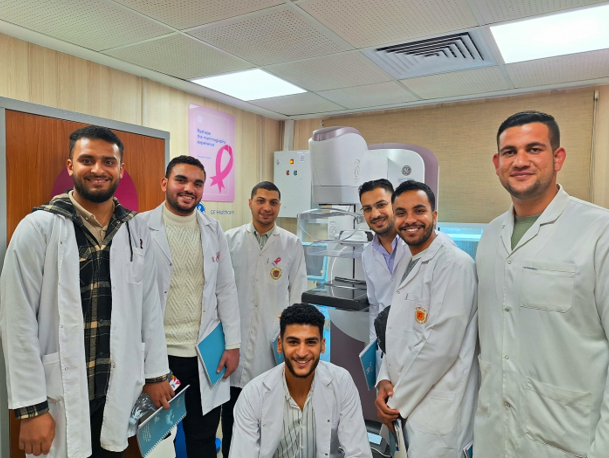
Field training is considered one of the teaching and learning strategies that provides students with a set of diverse field skills and experiences within an institutional framework. Additionally, it contributes to modifying their personal traits and behaviors, which significantly aid in the student’s professional development.
This development occurs by raising their level of competence within the educational program they are enrolled in, through linking theoretical knowledge with practical application. It also offers students the opportunity through selecting multiple venues consistent with each specialization and supervised by a specialized group of faculty members/assistants to hone their capabilities and desires.
This increases their eligibility for emerging and newly created jobs in the labor market at various levels: local, regional, and global.
1- Field training at the university’s training center (qualifying for graduation) during the summer semester:
Field training is one of the basic requirements for graduation. Students must complete the field training for a period, in accordance with the regulations of the College of Applied Medical Sciences Technology.
The training must be conducted at a training facility outside the university, according to their specialization.
Field Training Objectives (Summer Semester)
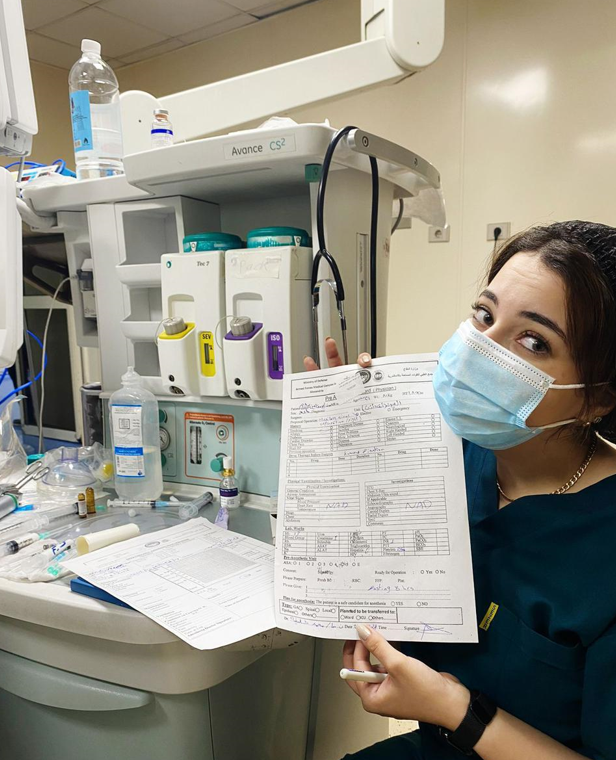
- The ability to link theoretical knowledge with practical applications in the actual work environment through daily routines experienced in various units, particularly hospitals.
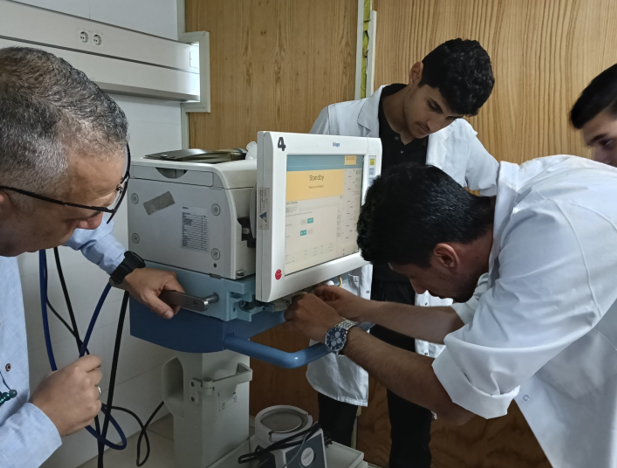
- Developing students’ skills in dealing with devices, tools, and technical applications related to the health sector.
- The ability to apply quality standards and rely on them in health practices.
- Emphasizing the students’ commitment to safety procedures and professional health.
- Developing teamwork skills within a multidisciplinary team.
- Instilling professional ethics and discipline in the workplace.
- Developing effective communication skills with patients, colleagues, and the medical team.
- Developing problem-solving skills and making decisions in practical and reality-based situations.
- Developing accurate observation and scientific and administrative documentation skills.
- Training students on using technical and informational systems in healthcare.
- The ability to think critically, analyze data, and reach practical conclusions.
- Acquiring time management and organization skills under pressure.
- Developing flexibility and the ability to adapt to different work conditions.
- Familiarizing them with the legal and organizational procedures related to health practices.
- Promoting continuous research and learning skills during practical experience.
- Training them to deal with emergency cases and ensure rapid response.
- Developing a spirit of leadership and responsibility among students in practical situations.
- Developing their skills in providing consultancy, support, and health promotion for the individual and the community.
- Developing self-assessment and the ability to accept and incorporate constructive feedback (or ‘receiving constructive feedback’).
- Preparing the student to be capable of seamless integration into the local and regional job market.
Duration and Timing of Training:
Field training for students of the College of Applied Health Sciences Technology is conducted over a period of two months during the academic summer semester. The schedule is allocated as follows:
- One month is assigned to Level 2 students progressing to Level 3 (provided they have completed of their study plan).
- One month is assigned to Level 3 students progressing to Level 4.
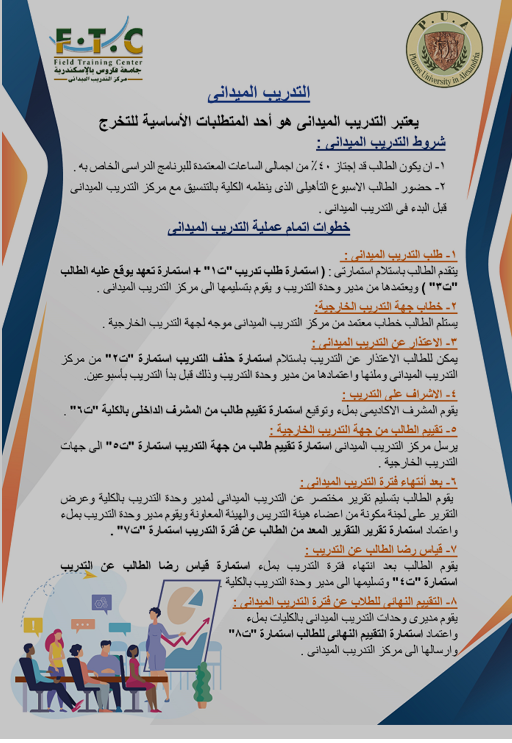
Training steps According to the instructions of the university’s Field Training Center, as follows:
The Unit Responsible for the Program:
The Field Training Unit at the College of Applied Health Sciences Technology, which is affiliated with the University’s Field Training Center, is headed by Professor Dr. Mohamed Etman the Vice President for Community Service and Environmental Development. It is supervised by Dr. Radwa Meshref, Administrator of the Training Unit at the College and a lecturer in the Department of Biomedical Equipment Technology, in addition to faculty members and assisting staff from the College. Institutions with which cooperation protocols have been signed for Field Training:
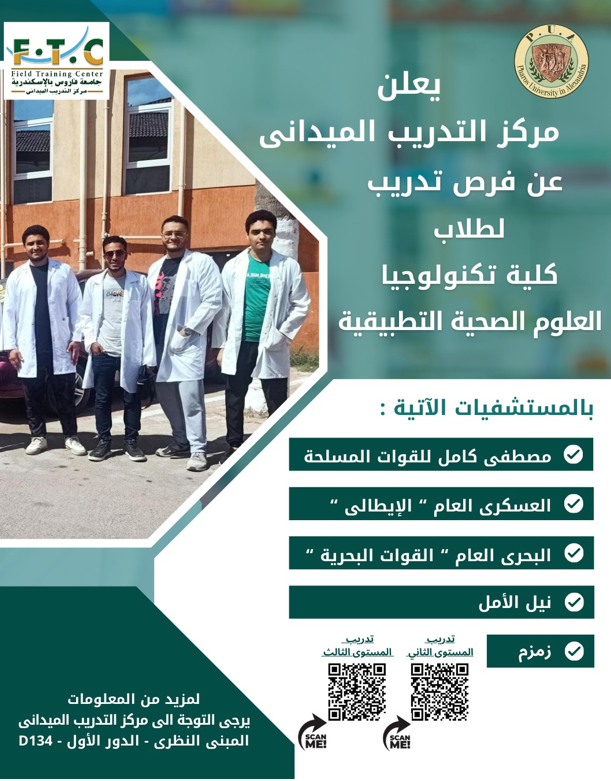
– Hospitals affiliated with the Armed Forces in Alexandria:
(Armed Forces Medical Complex in Mustafa Kamel / General Military Hospital (Italian) / Ras El Tin Maritime Hospitals).
– Private sector hospitals in Alexandria:
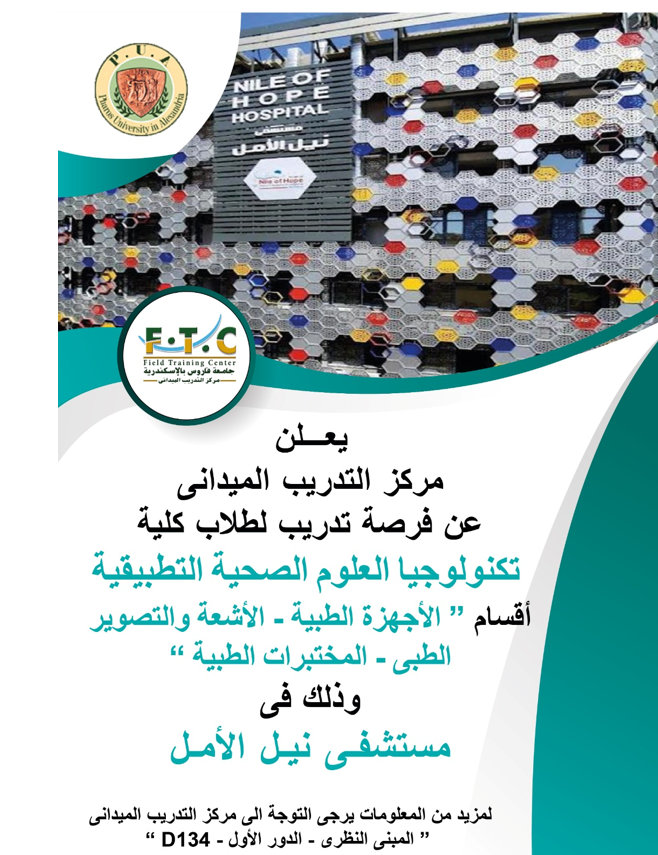
(Nile El Amal Hospitals / Zamzam Hospitals)
A strategic partnership makes a difference: Leaders of military and private medical edifices are hosted by “Health Sciences Technology” at Pharos University
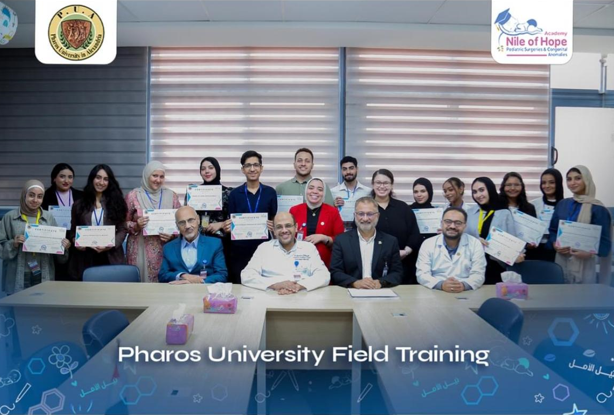
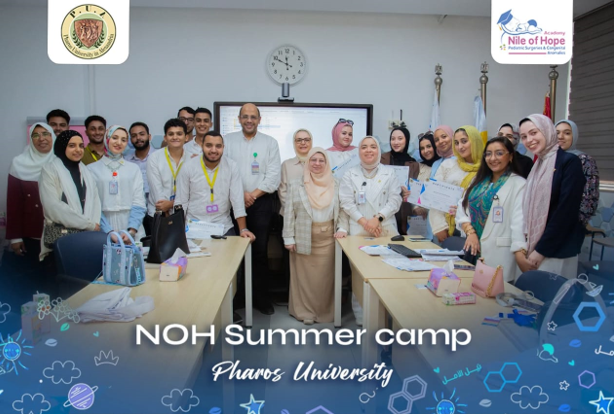
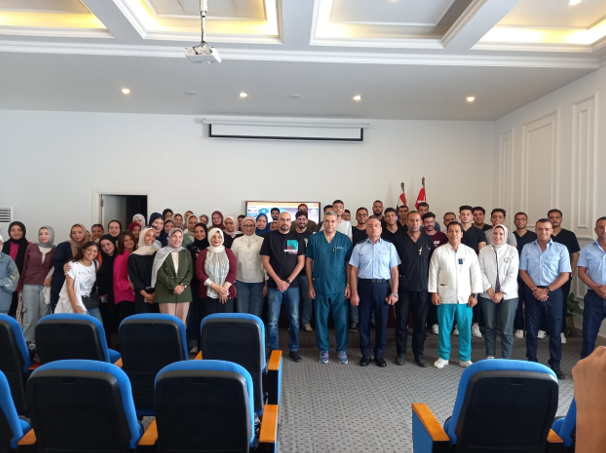
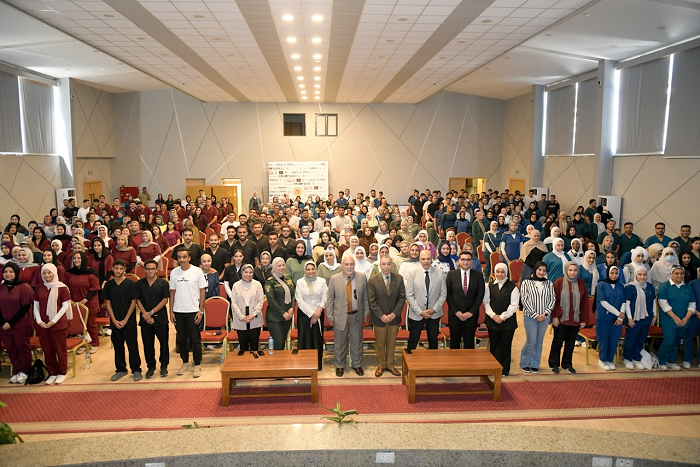
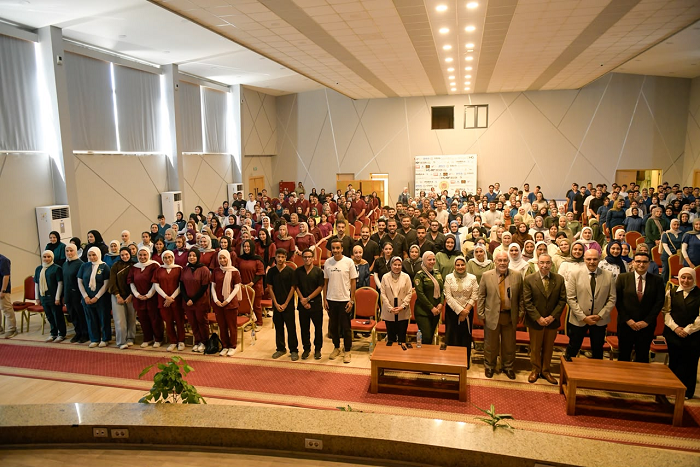
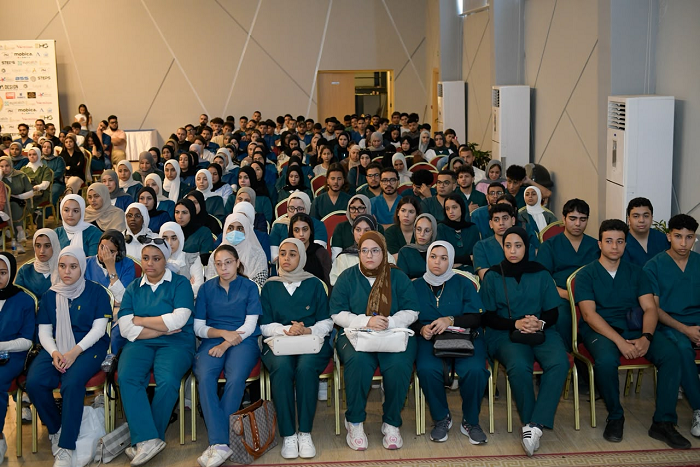
The Faculty of Applied Health Sciences Technology at Pharos University succeeded in consolidating its strategic alliances with the leaders of the military and civilian medical system in Alexandria, during the activities of the second day of the “qualification week” designated for third-level students, in preparation for the launch of their field training for the summer of 2026.
Leadership presence and mutual praise with major hospitals
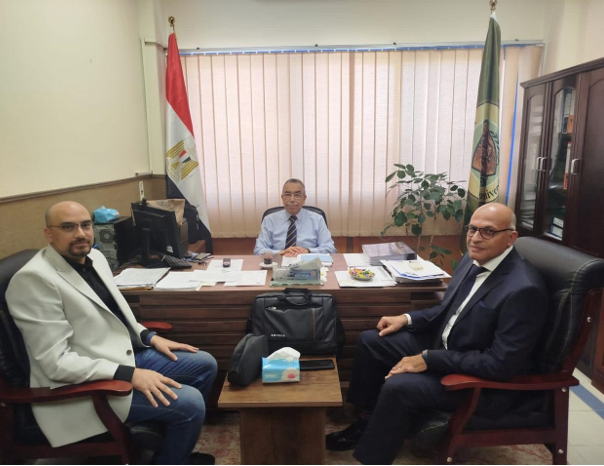
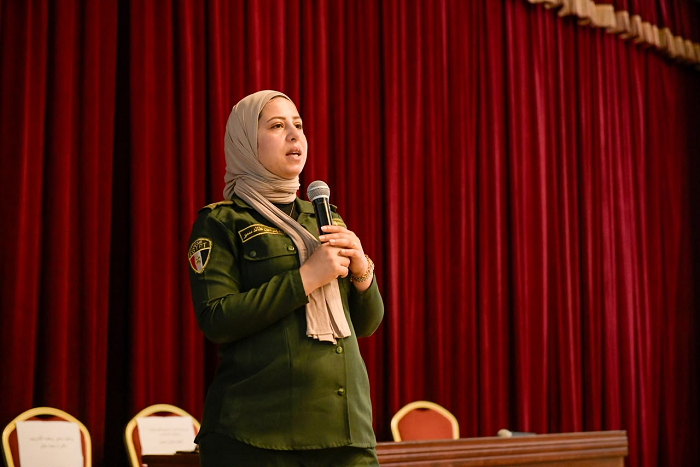
The events were distinguished by the high-level participation of leaders and representatives of the venerable medical institutions that will open their doors to receive students for training this summer, Ras El Tin Military Hospital (Naval): The event witnessed an exceptional presence led by Brigadier General Doctor / Ahmed Musa Abdel Rahman Salama (Medical Analysis Consultant in the Northern Military Region, Analysis Consultant in the Armed Forces Hospitals, and Lecturer at the Military Medical Academy), representing the hospital led by Major General Doctor /Abdel Moez Hamed (hospital director), with the participation of Dr. Alaa Issawi (Director of the Clinical Pharmacy Unit), in addition to the distinguished presence of representatives of Zamzam Hospital “Future Hands” Hospital for Oncology Treatment.
The meeting was honored by the presence of Major General Doctor Amr Abbasi (Director of the Hospital) and Dr. Azza Hussein (Director of the Infection Control Department)
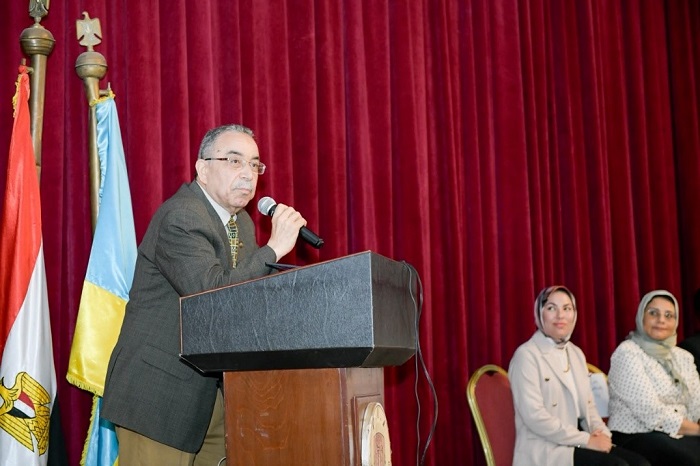
Praise for the pioneering role of Pharos University: In a prominent speech, Major General Doctor Amr Abbasi extended his sincere thanks and praise to the administration of Pharos University, appreciating its continued and pioneering support for the “Hands of the Future” Hospital, and stressing the depth of sustainable cooperation between the two sides to serve the health system and society.
The strategic weight of the event was directly reflected on the students, who had a unique interactive opportunity to engage in direct dialogue with leaders and experts. Hospital representatives answered all specialized inquiries accurately, introducing them to the medical departments participating in the training in each hospital.
This interaction contributed to achieving two pivotal goals: identifying training destinations: enabling students to choose the appropriate hospitals for them based on the capacity of each unit. Behavioral skills: practically training students in professional communication skills with leaders in the medical field to break down barriers before starting actual training. Specialized organization map: intensive efforts by the supporting body.
Behind the scenes, members of the college’s assistant staff demonstrated high professionalism in managing, distributing, directing students, and coordinating their desires based on their specialized programs, and the organization map was as follows: Medical Laboratory Technology Program: M.Eng. Hajar Ali, Eng. Nourhan Abdel Moati, Eng. Amira Abdel Nasser, Eng. Malak Wagih Critical Care and Intensive Care Technology Program: Eng. Rawan Mustafa, Eng. Mohamed Othman Radiology and Medical Imaging Technology Program: Eng. Ahmed Shawky, Eng. Abdel Rahman Nasser. Dental Implant Technology Program: Eng. Hajar Sharif, Eng. Abanoub Akram, Eng. Nada Yasser, Eng. Donia Salam Medical Device Technology Program: Eng. Rahma Al-Awad, Eng. Ruqaya Ahmed, Eng. Amani Al-Sayed Nutrition Technology and Food Safety Program: Eng. Nour Mustafa.
It is worth noting that this important qualifying event is affiliated with the University’s Field Training Center and in integrated coordination between the patronage of Prof. Dr. Mohamed Etman (Vice President for Community Service and Environmental Development Affairs and Director of the Field Training Center), and Prof. Dr. Hamdy El-Wakil (Dean of the College for Education and Student Affairs and Acting Dean), and under the close supervision and follow-up of Dr. Radwa Abdel Rahman (Director of the Training Unit at the College) While the platform was managed and guests were presented with distinction by Dr. Amira Abdel Fattah (Deputy Director of the Unit)
Gallery of photos