Reviewing a Master’s Thesis on Modern Workplace Design
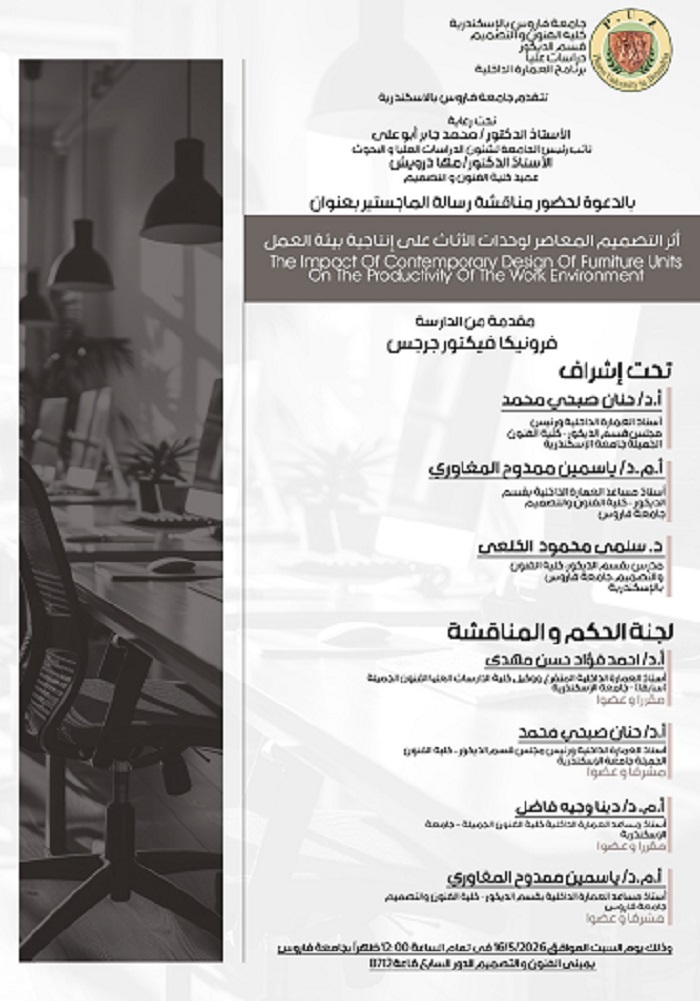
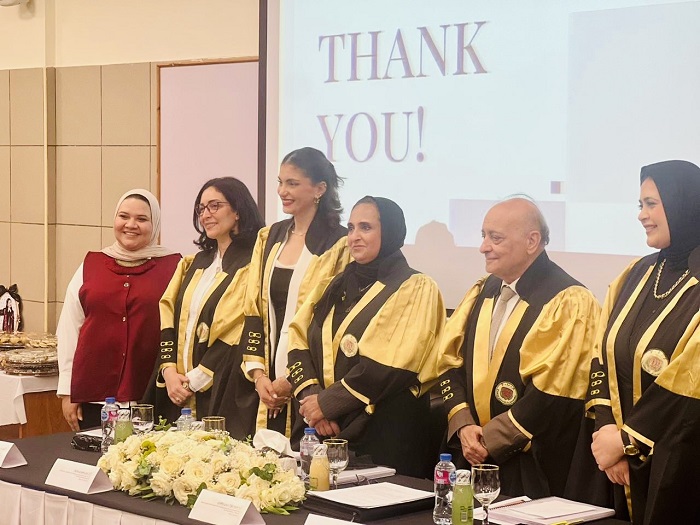
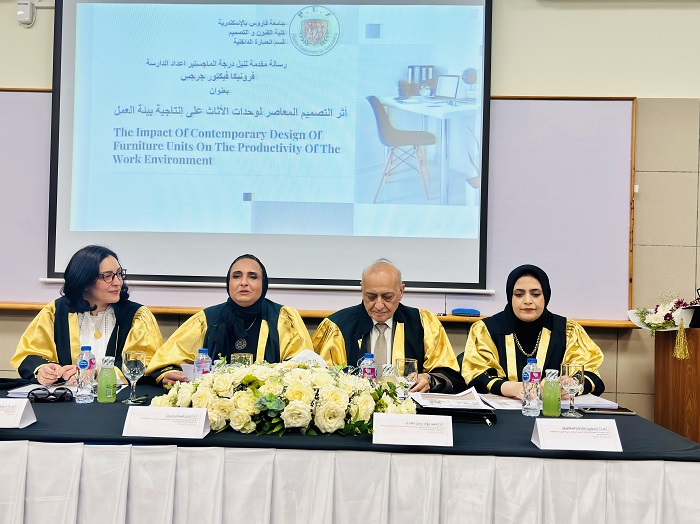
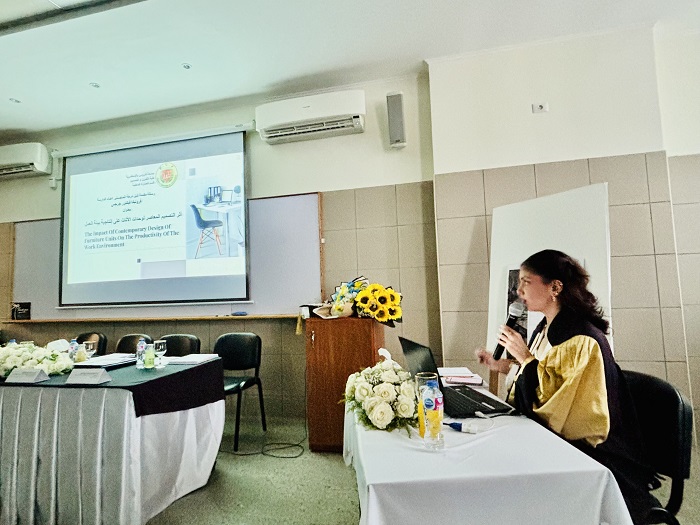
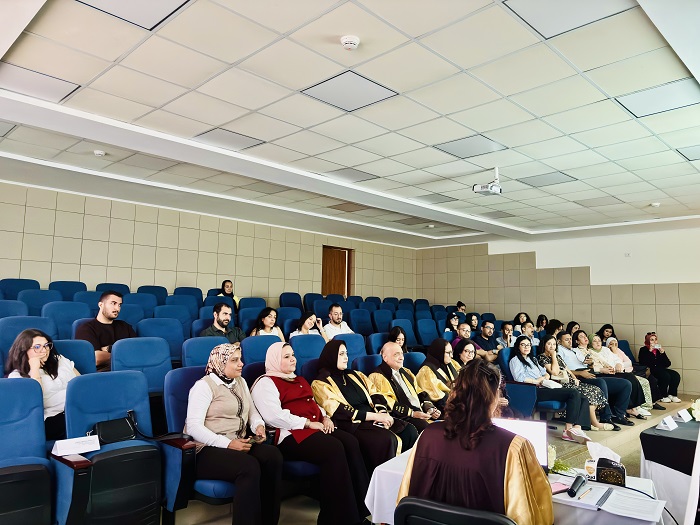
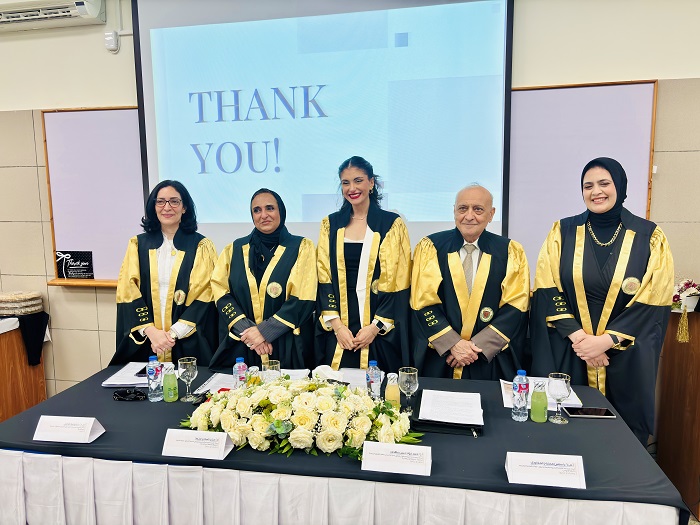
Within the Décor Department at PUA’s Faculty of Arts and Design, postgraduate researcher Veronica Victor, defended the Department’s second Master’s thesis specializing in “Interior Architecture.” This milestone activates the Faculty’s strategy aimed at strengthening the role of graduate studies and scientific research to serve the community and specialized academic disciplines, while keeping pace with the shifting needs of contemporary institutional environments.
The study aimed to analyze the impact of contemporary office furniture design on workplace productivity. This was achieved by evaluating the aesthetic, functional, ergonomic, environmental, and psychological criteria that directly influence user performance. The research successfully uncovered the existing design flaws in traditional office furniture models, culminating in an innovative design proposal that improves workplace efficiency, boosts productivity, and enhances sustainability.
The scientific importance of this thesis stems from its ability to bridge a distinct research gap by establishing an integrated framework linking the characteristics of contemporary furniture design with measurable productivity indicators. The study merges multiple disciplines, including interior design, industrial design, ergonomics, and environmental psychology. On a practical and societal level, the research offers logistics to optimize work environments, enhance employee comfort, reduce occupational health hazards—such as musculoskeletal disorders—and support eco-friendly materials to lower the carbon footprint, thereby guiding decision-makers toward more humane and efficient design choices.
The thesis concluded with a package of essential scientific findings, notably detecting a clear gap and shortfall in current office furniture models regarding flexibility, adaptability, and ergonomic comfort. The study proved that the impact of office furniture extends beyond mere functionality into psychological and behavioral realms, directly dictating job satisfaction, creativity, and motivation. The research demonstrated a direct correlation between ergonomic comfort, enhanced mental focus, and reduced fatigue. Furthermore, the practical design proposal presented by the researcher outperformed traditional models in terms of flexibility, efficiency, user satisfaction, and sustainability.
The study recommended adopting human-centered, comprehensive design methodologies and increasing the integration of ergonomic standards and smart technologies within office furniture to support flexible, modern work patterns. The thesis urged institutions and policymakers to invest consciously in interior design to maximize productivity, while relying on sustainable materials and production processes to mitigate environmental impacts. This opens new horizons for future studies examining the evolving relationship between technology and human performance in advanced work environments.