
Financial Sciences’ 10th International Conference Concluded
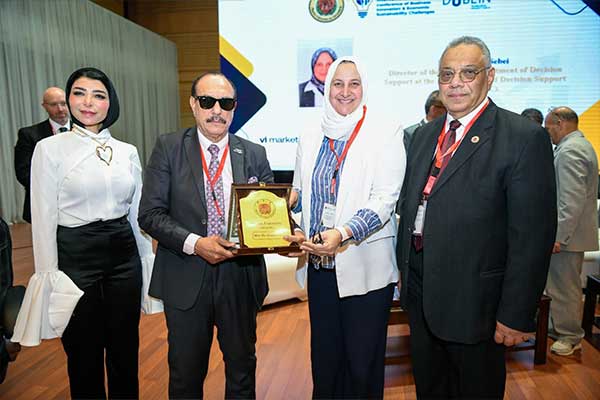
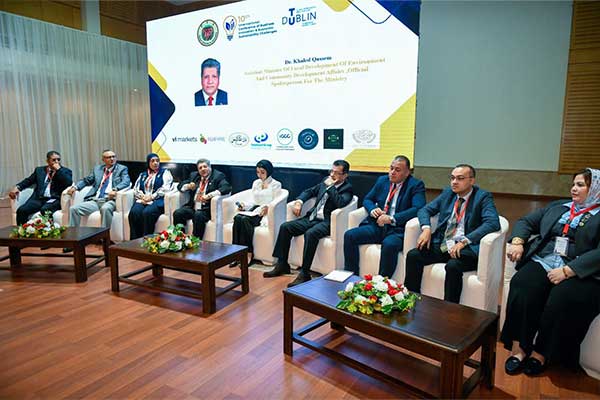
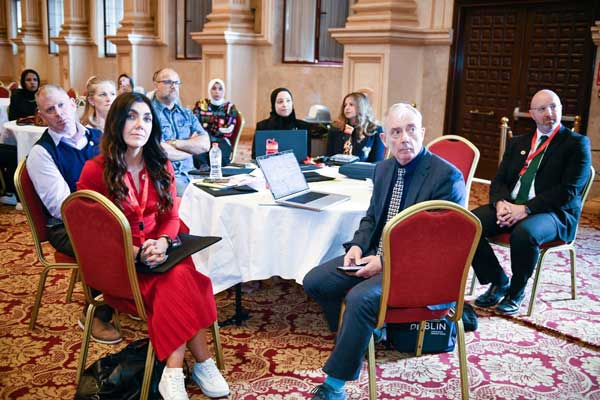
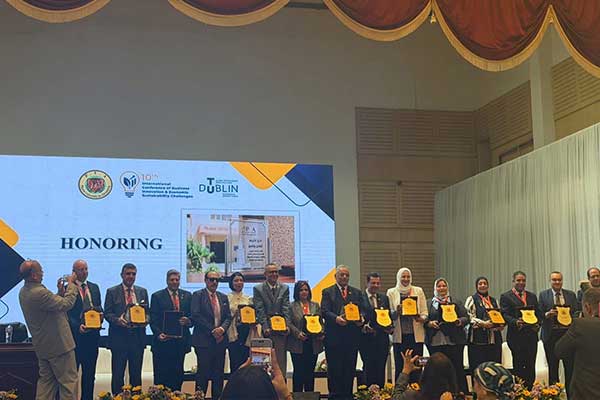
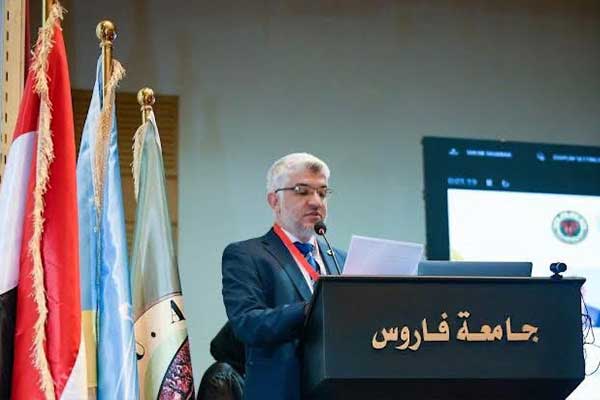
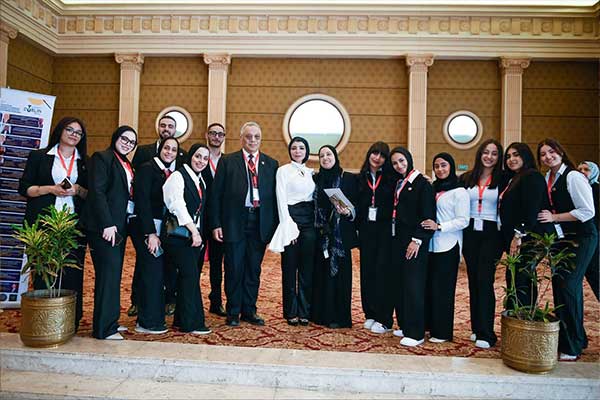
PUA’s Faculty of Financial and Administrative Sciences concluded the activities of its 10th International Conference, organized in academic partnership with Technological University Dublin (TU Dublin). Held under the theme “Digital Transformation, Sustainability, and the Knowledge Economy,” the conference aimed to formulate a forward-looking vision that supports building a more competitive and sustainable knowledge-based economy. The scientific event witnessed a high-level attendance of executive and academic leaders, headed by the Chairman of the Commercial Studies Sector at the Supreme Council of Universities, the Assistant Minister of Local Development, and the Directors of the Information and Decision Support Center at the Egyptian Cabinet. They were joined by the Vice Dean of the Faculty of Commerce at Tanta University, alongside an elite group of deans and faculty members from Egyptian and regional commercial and administrative institutions. The sessions reviewed 35 scientific research papers presented in both Arabic and English by researchers from Egypt, Saudi Arabia, Tunisia, Malaysia, and Australia, while a specialized panel discussion was held on the sidelines titled “Energy Resource Management in the Era of Challenges… Towards a Zero-Waste Future.”
The conference outcomes outlined key strategic tracks formulated by the participants, where the first track focused on education and future jobs. The recommendations emphasized restructuring educational frameworks to align with the logistical needs of each geographic region, directing academic specializations toward actual employment sectors while deepening private sector integration, and utilizing advanced predictive tools to forecast future job demands, alongside launching intensive professional retraining programs to bridge gaps caused by accelerated AI adoption in business. The second track addressed the knowledge economy and artificial intelligence, recommending the mitigation of institutional and structural obstacles to support the knowledge engine within emerging firms, and enhancing corporate determinants of financial inclusion, digital infrastructure, and energy frameworks, while calling for the construction of Explainable AI models in financial auditing and bank marketing to enhance trust in automated decisions and enable auditors to understand evaluation parameters.
Regarding the third track, which focused on environmental sustainability and green finance, the recommendations urged incentivizing green building initiatives, mandating solar panel installation on facades and rooftops to generate clean energy, maximizing the utilization of treated wastewater, and recycling graywater within residential units. This track also proposed tax incentives for sustainable cooperative housing projects, linking them to green bonds and circular economy principles to achieve a balance between economic growth and social justice. The fourth track dealt with service management and marketing, where hospitality research indicated that co-creating services with customers elevates satisfaction and competitive advantage, while retail market findings highlighted the optimization of storefront designs and signage due to their significant impact on consumer purchase intent, alongside a recurring emphasis on implementing explainable predictive AI models to accurately gauge banking customer responses and mitigate operational risks.
The scientific presentations concluded with the fifth track, which discussed digital accounting and disclosure systems. The studies highlighted the importance of updating accounting practices to properly disclose internally generated intangible assets due to their direct impact on stock pricing in financial markets, recommending a transition toward digital managerial accounting driven by big data analytics. It also emphasized integrating Blockchain and Artificial Intelligence within organizational structures to optimize cost measurement and guide administrative decisions while embedding environmental dimensions into costing systems. The conference concluded that a successful digital transformation depends heavily on developing human capital, upgrading digital governance regulations, and eliminating algorithmic bias, rather than merely adopting technical tools. Transforming these proposals into measurable executive programs through close coordination among the government, private sector, and academia serves as a practical milestone to boost national productivity and drive sustainable, inclusive growth.