
Dr. Mohamed Hossam Awarded Master’s Degree
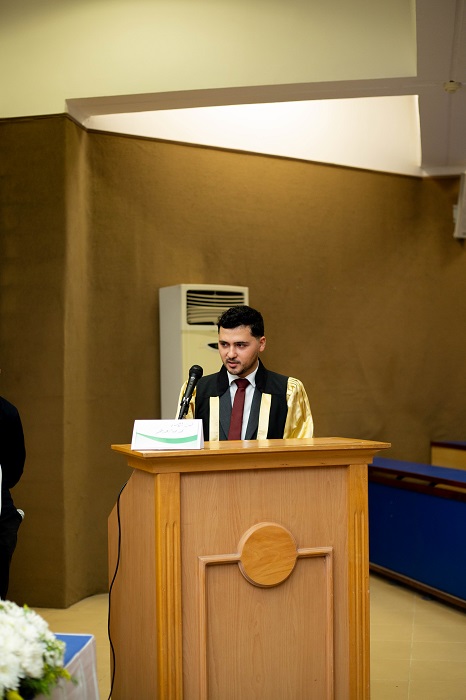
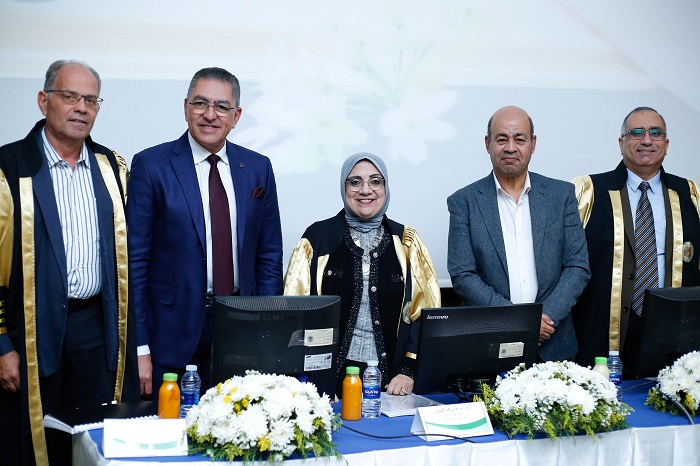
PUA’s Faculty of Dentistry celebrated Dr. Mohamed Hossam Abdel Hakim’s attainment of a Master’s degree in the Department of Prosthodontics and Dental Implantology, following the defense of his thesis entitled: “Accuracy of Occlusal Registration Using Different Digital Intraoral Scanners (A Comparative In-vitro Study)”
This laboratory study aims to evaluate and compare the accuracy of digital bite registration in terms of trueness and precision using five digital intraoral scanners representing different categories of performance and cost. The study included high-performance scanners as well as low-cost alternatives, to examine the impact of scanner type on the accuracy of occlusal relationship registration.
The study was conducted on a complete three-dimensionally printed dental model simulating the anatomical structure and occlusal relationship of the human mouth, aiming to standardize measurement conditions and minimize intraoral variables. The samples were divided into five groups, with each group scanned using a different intraoral scanner, maintaining an equal number of scans per group. A high-precision laboratory scanner was used to create a digital reference model, and the resulting STL files were adopted as the comparison baseline. All digital data were imported into three-dimensional analysis software to measure occlusal deviations, where trueness and precision were evaluated through three-dimensional deviation analysis between digital registrations and the reference model. Statistical analysis included calculating means, standard deviations, minimum and maximum values, in addition to conducting appropriate statistical tests to identify statistically significant differences among the different groups.
Results revealed statistically significant differences among the various intraoral scanners in terms of trueness and precision, with recorded values across all groups converging within clinically acceptable limits. Some low-cost scanners demonstrated acceptable performance in digital bite registration when employing a standardized scanning protocol and consistent measurement conditions.
This study concluded that digital bite registration using intraoral scanners can achieve clinically acceptable accuracy, and that some low-cost scanners may represent practical alternatives in certain clinical applications, particularly when adhering to standardized scanning procedures and appropriate calibration.